
Zone Zero and FireScaping
Fire-Safe Landscaping with California Native Plants - How thoughtful design — not bare dirt — can protect your home while honoring the natural beauty of San Diego's inland hills.
Poway is one of the most beautiful communities in San Diego County — and one of the most fire-prone. Situated where suburban neighborhoods meet the chaparral of the inland foothills, homes here face genuine wildfire risk every year. But protecting your property doesn't have to mean replacing your garden with gravel and despair. With the right design approach, your landscape can be both fire-resilient and genuinely stunning.
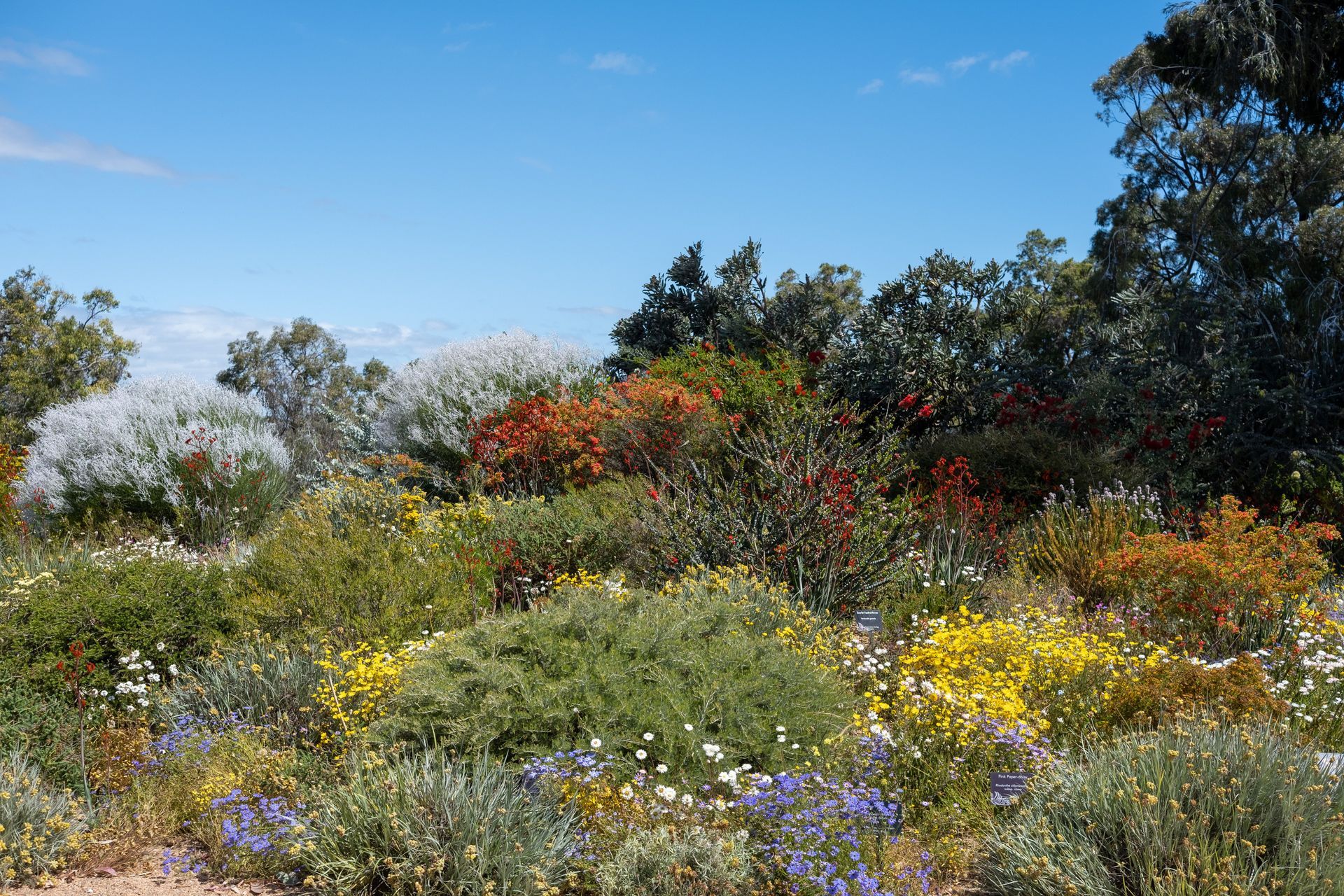
As a landscape designer who works throughout the Poway area, I've spent years developing plans that work with California's fire environment rather than against it. The key insight: fire-scaping done well doesn't look like fire-scaping. It looks like a thriving, water-wise California native garden — because that's exactly what it is.
Understanding California's defensible space rules
California law requires homeowners in fire-hazard zones to maintain defensible space up to 100 feet around their structures. In 2020, legislation created a new "Zone 0" — the five feet immediately surrounding your home — which is being formalized into code. San Diego County goes further than state minimums, requiring 50 feet of clearance in Zone 1 rather than the state's standard 30 feet.
Here's what each zone means for your planting design:
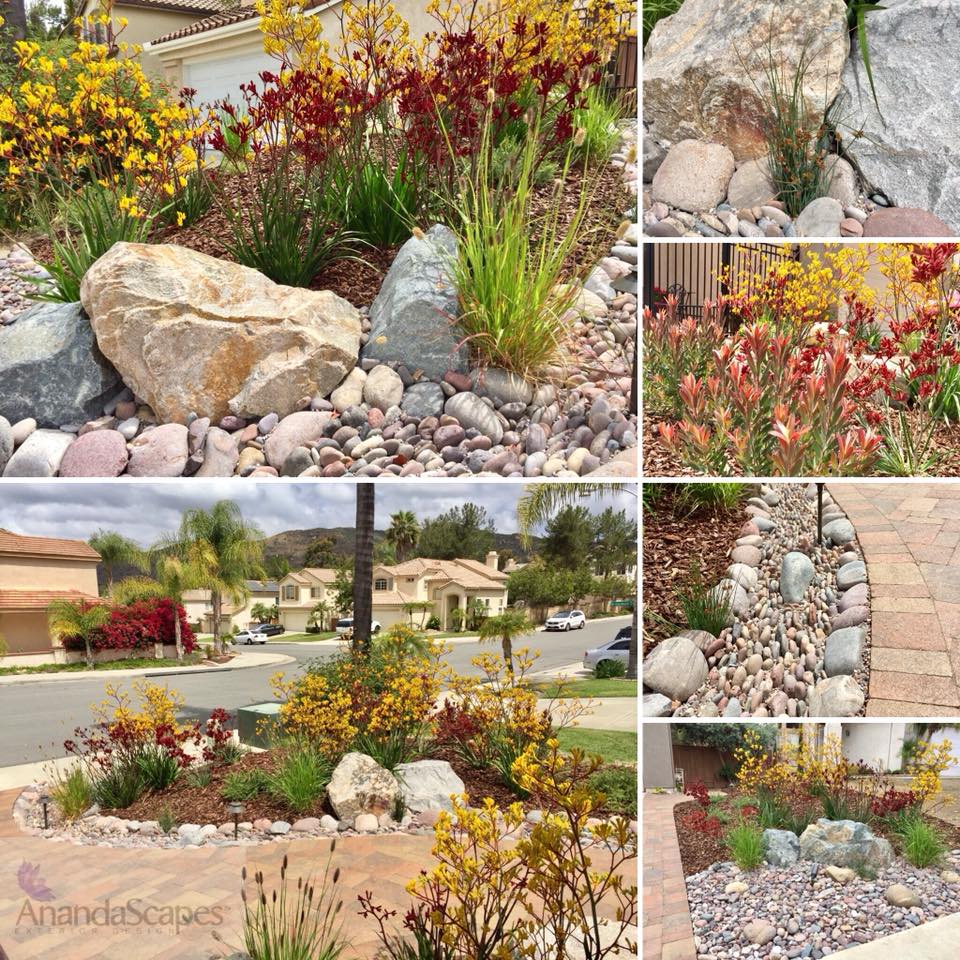
Zone 0 (0–5 ft): This is the ember-resistant perimeter. CAL FIRE is clear: no combustible bark mulch, no woody plants tight against the foundation. Replace with gravel, decomposed granite, pavers, or concrete. This zone is an ignition issue, not just a landscaping issue — flying embers can travel miles ahead of a fire front and ignite anything combustible against your walls.
Zone 1 (5–30 ft in San Diego County): This is where thoughtful native planting does its most important work. Plants should be low-growing, well-spaced, and free of "ladder fuels" — the shrubs and low branches that allow a ground fire to climb into the tree canopy. Trees should have their lower branches pruned to at least 6 feet from the ground. SD County has a stricter rule than the Sate of CA, which is 5 to 50 feet.
Zone 2 (30–100 ft): Thin vegetation, reduce density, and eliminate dead plant material. Native grasses should be mowed to 4 inches during dry season.
The best California native plants for fire-safe landscaping
The good news: many of the most fire-resistant plants available are California natives that have evolved over thousands of years in exactly the climate conditions Poway experiences — hot, dry summers, occasional Santa Ana winds, and periodic fire. These plants tend to have high moisture content in their leaves, loose airy foliage structure, and low resin or oil content compared to notoriously flammable species like Juniper, Eucalyptus, or Italian Cypress.* *Many Junipers and Italian Cypresses in the Alta Dena area that were completely hydrated, only burned on the side facing the fire engulfed house. This means well hydrated plant material that is outside of the Zone Zero area, may not burn in the way one would expect.
🌿
Cleveland Sage
Salvia clevelandii
Zone 1 & 2
🌸
California Fuchsia
Epilobium canum
Zone 1
🌱
Deer Grass
Muhlenbergia rigens
Zone 1 & 2
🌼
Toyon
Heteromeles arbutifolia
Zone 2
🌾
Coyote Brush
Baccharis pilularis
Zone 1 & 2
💜
Blue-eyed Grass
Sisyrinchium bellum
Zone 1
What makes these plants work in a fire-safe design isn't just their chemistry — it's how they're arranged. Islands of planting separated by hardscape, gravel paths, or decomposed granite breaks interrupt the fire's ability to travel horizontally across your property. We call these "fuel breaks," and they're one of the most powerful tools in a fire-safe design.
Beauty and fire safety aren't opposites
One of the most common misconceptions I encounter is that fire-safe landscaping has to look sparse, utilitarian, or simply unfinished. It doesn't. In fact, a blank slope leading to your property now gives those ember a straight shot at a direct hit on your home sending it up in flames. The difference is in the spacing, the plant selection, and the layering. A fire-safe design places the right plants in the right zones, eliminates combustible connections between plant masses, and replaces flammable ground covers with beautiful hardscape elements — decomposed granite, native stone, custom boulders — that anchor the design and give it year-round structure. This will slow those flying embers, trapping them before they reach your home. A well-designed native garden can be lush with texture, fragrance, and seasonal color — hummingbirds visiting California fuchsia in late summer, the silver shimmer of Cleveland sage in a breeze, the winter berries of Toyon feeding mockingbirds through December.
A professional landscape design plan can ensure your property meets current requirements while giving you a garden that's genuinely worth protecting.
Ready to design your fire-safe landscape?
AnandaScapes creates custom CAD landscape plans for Poway and San Diego County homeowners, specializing in California native plants and fire-safe design.
Schedule a consultation